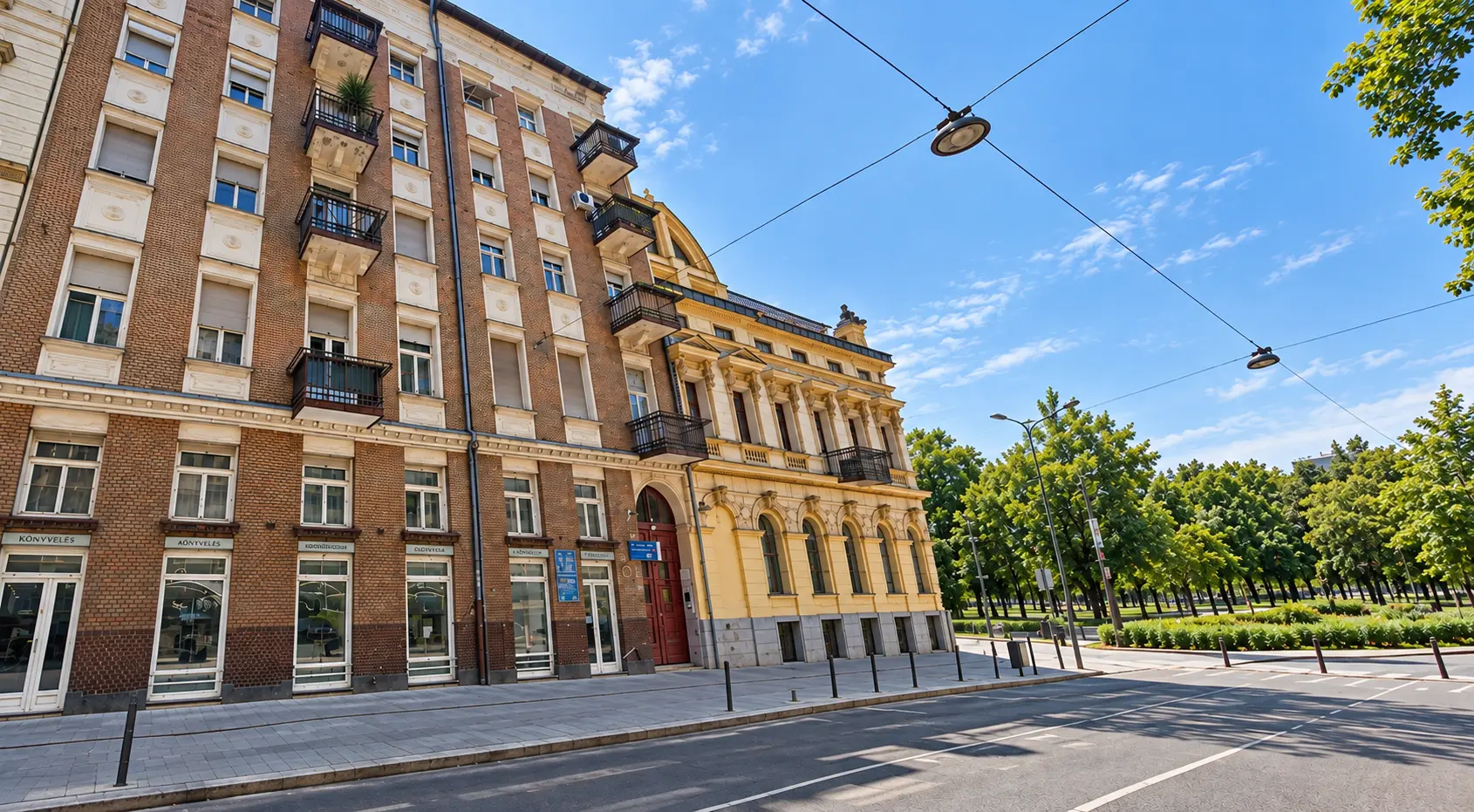
At the beginning of 2026, I went to see an apartment near II. János Pál pápa tér in District VIII. On paper, it was very close to the type of investment I had been looking for.
The apartment was 76 m² and had already been divided into six very small, self-contained units. When I viewed it, the asking price was around 80 million HUF.
I didn’t buy it.
The interesting part is that the apartment itself wasn’t really the reason.
The location made sense
This is a part of District VIII that I personally like. II. János Pál pápa tér is close, there is a large green square nearby, and public transport is unusually good.
The M4 metro is at II. János Pál pápa tér. The M2 is also nearby, Rákóczi út is within easy reach, and Keleti railway station is close. For a rental property, especially one aimed at people who do not have a car, that matters.
The building also made a good first impression. It was in much better condition than many older Budapest buildings I had looked at.
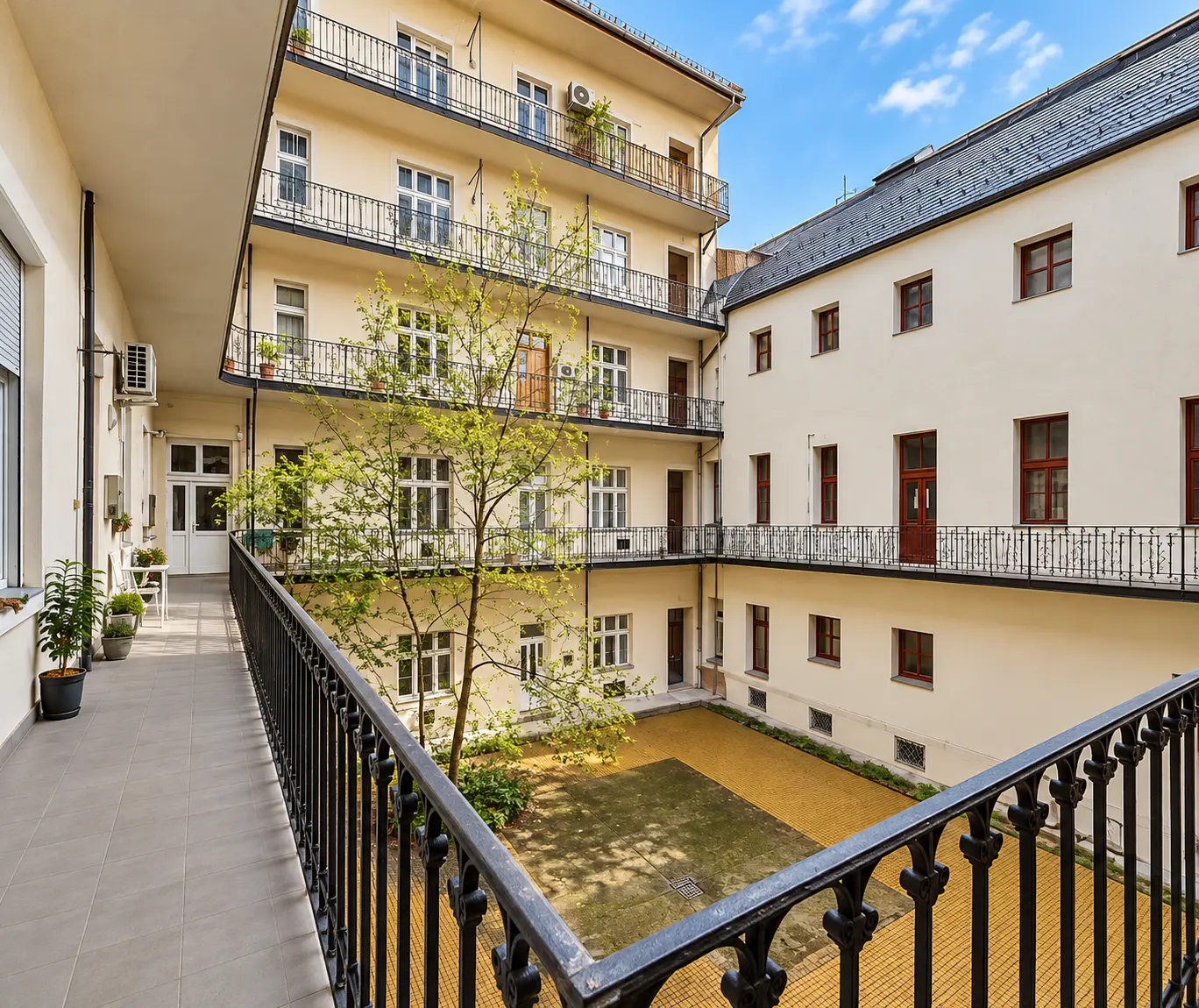
The apartment was on the first floor. I generally prefer that to a ground-floor apartment in an old building. Ground-floor flats can sometimes have more issues with damp and moisture depending on the building, although the floor alone obviously doesn’t tell you whether a property will have those problems.
Six tiny apartments inside 76 m²
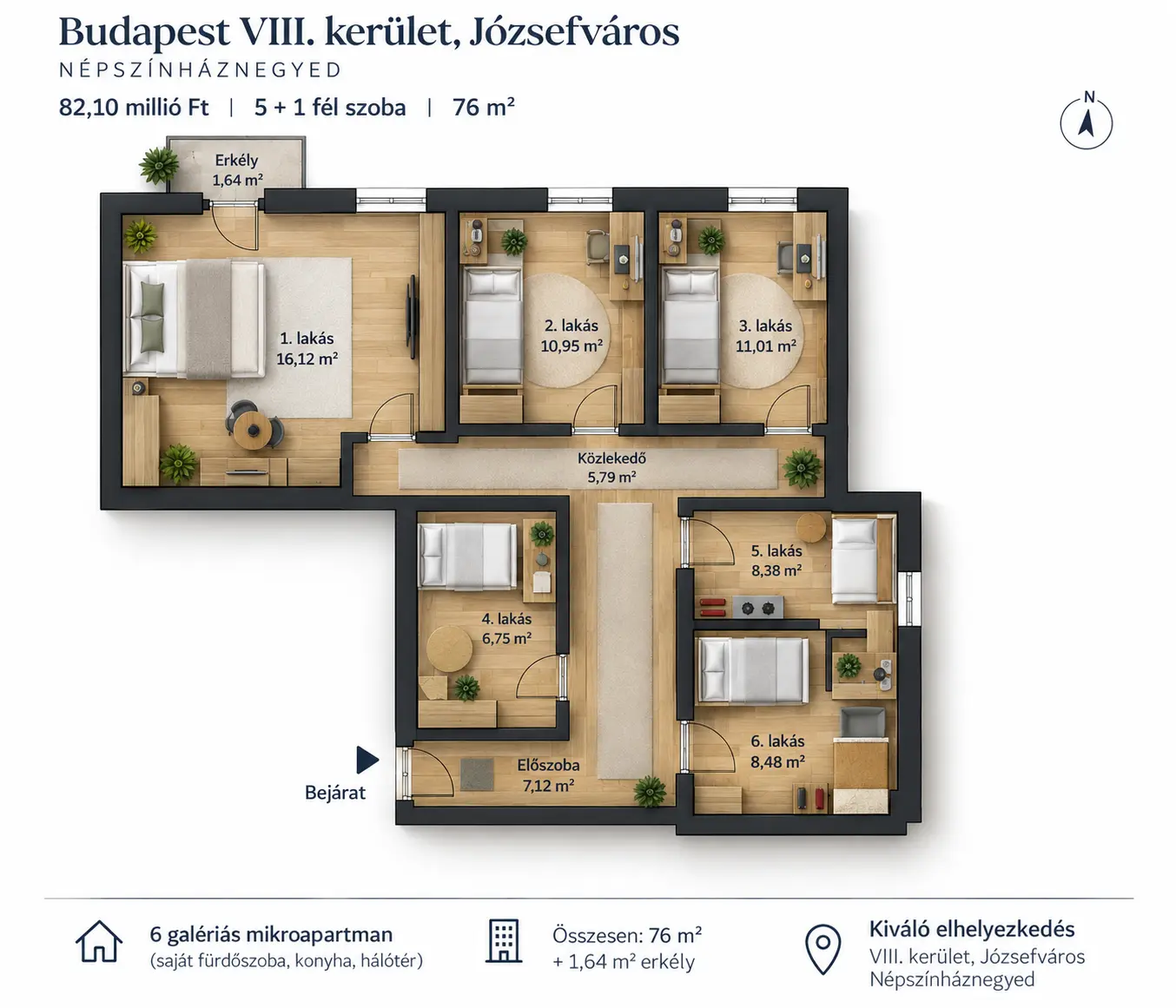
What made the property unusual was the layout.
Instead of functioning as one normal 76 m² apartment, it had been divided into six small private units. The units were different sizes—roughly 6.75 m² to 16.12 m² on the floor plan—with a shared entrance and circulation area.
These weren’t simply six bedrooms in a shared apartment.
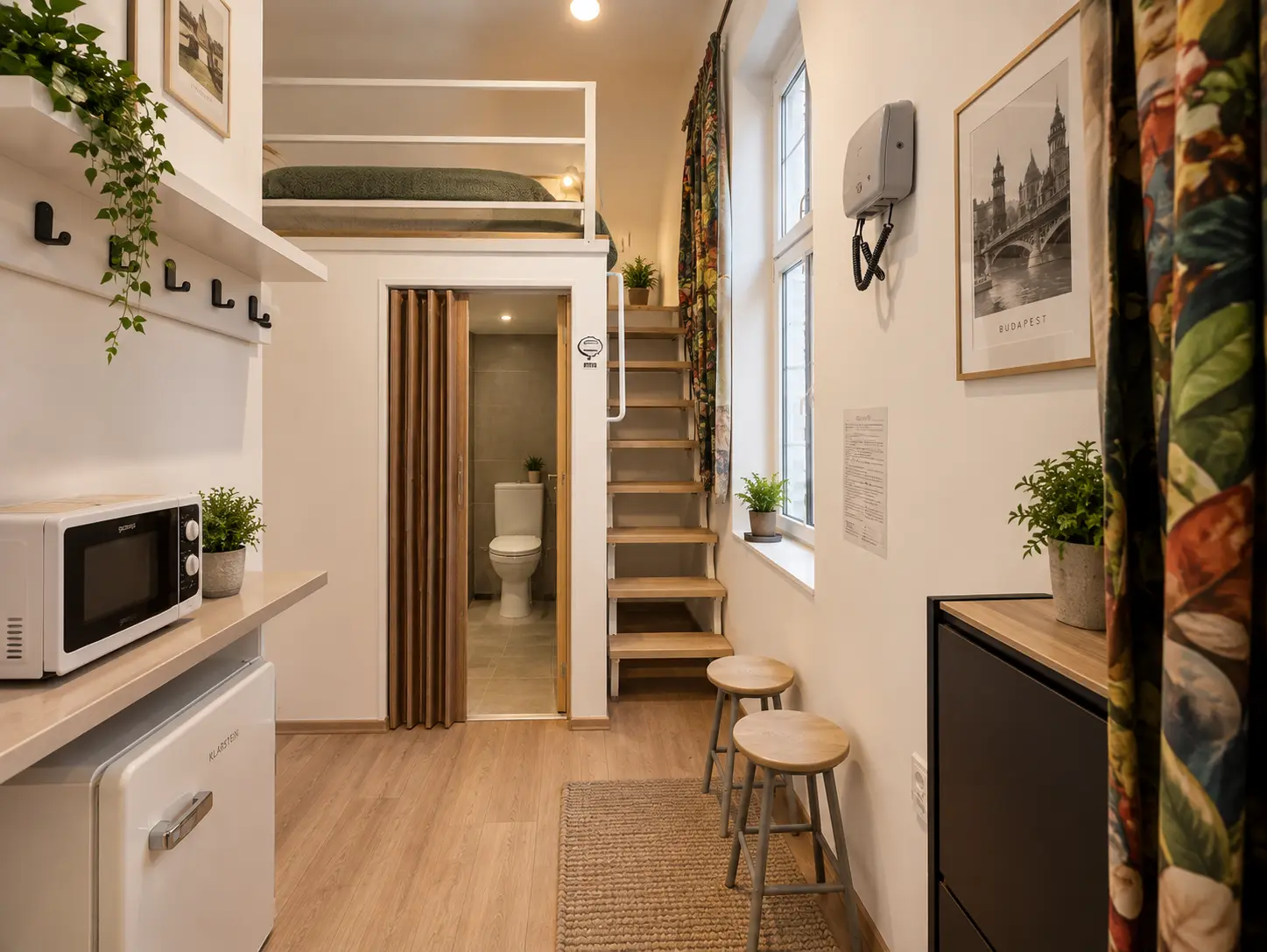
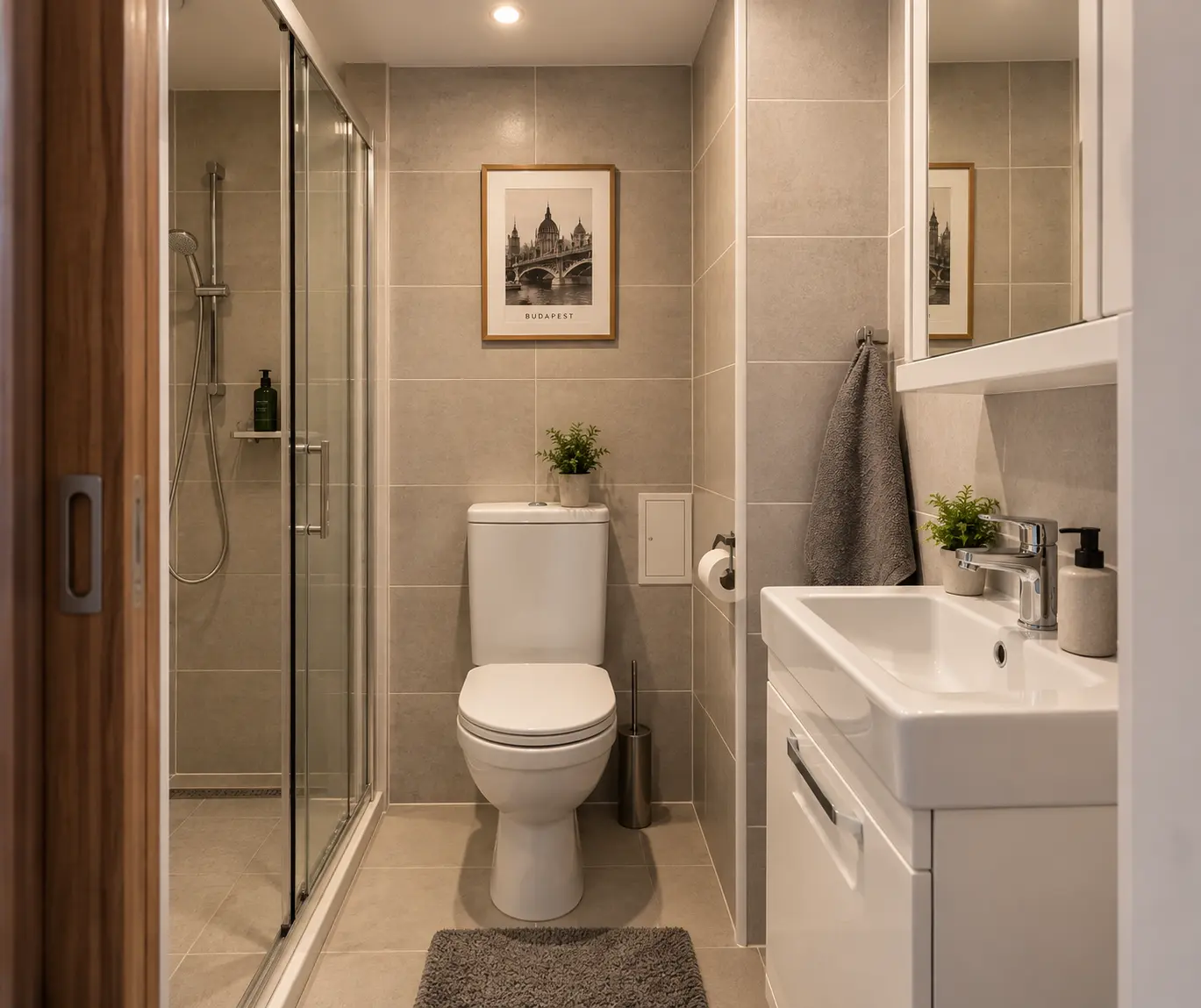
The idea was that each tenant would have their own small living space, kitchenette and private bathroom/WC. The sleeping area was placed on a gallery, with the bathroom incorporated underneath the gallery structure. The corridor and entrance were shared, but tenants did not have to share the things that usually make room rentals feel like room rentals: a kitchen and bathroom.
That distinction was the main reason I found the property interesting.
At the time, I estimated that a finished unit could rent for roughly 120,000 HUF per month plus utilities. Around that price point in Budapest, a tenant may otherwise be looking at a room in a shared apartment. Here, the space would be tiny, but it would be private.
Six units at 120,000 HUF would mean around 720,000 HUF gross rent per month, assuming all six were occupied.
I checked the electricity carefully
One thing I pay particular attention to is electrical capacity. I have an electrician qualification, and this becomes much more important when one apartment is effectively being used by several independent households.
Six tenants can be cooking, heating water, running air conditioning and using appliances at the same time. A layout can look excellent on a floor plan and still become a problem if the electrical infrastructure cannot support the way the property will actually be used.
The apartment I had looked at immediately before this one fell apart partly for exactly this reason. I’ll write about that property separately.
With this property, the electrical situation looked much better and did not appear to be the deal-breaker.
The owner was living there
This is where it became more complicated.
The owner had moved into the property himself. As I understood the situation, he did not have another obvious place to live at the time, and he had started changing some of the small units for his own use.
In some places, toilets or showers had been removed to create more living space. That wasn’t necessarily a disaster. They could have been restored. But it meant the property wasn’t simply ready to rent in the configuration I wanted.
The bigger problem was the negotiation.
The seller wanted some of the things already installed in the apartment to be calculated separately from the purchase price. This included items such as the boiler, pipes, electrical wiring, furniture and other things he had spent money on during the renovation. At different points, there was also discussion that some of these things could be removed if they weren’t paid for separately.
For me, that made the transaction increasingly difficult to define.
We even brought in a Chinese female estate agent who had lived in Hungary and spoke Hungarian perfectly. The point was to remove any possible language or cultural misunderstanding from the negotiation. She spoke directly with the seller and also found it extremely difficult to reach a clear, workable agreement.
The numbers were still tempting
At around 80 million HUF, the purchase price worked out to approximately 1.05 million HUF per m².
My plan was unusually leveraged: I was considering financing the full 80 million HUF purchase price with debt by providing another property as additional collateral.
Using a simple 30-year mortgage assumption at 7% interest, the monthly payment on 80 million HUF would be approximately 532,000 HUF.
The rough calculation at the time
Still, the basic numbers were interesting enough that I was willing to spend time trying to make the deal work.
Why I walked away
Eventually, the problem wasn’t the location, the building, the micro-apartment concept or even the financing.
It was the transaction risk.
The seller was living throughout the property, negotiations around what exactly was included in the purchase kept becoming more complicated, and I wasn’t comfortable relying on informal assurances that everything would be cleared out and handed over as expected at completion.
I couldn’t know that the seller wouldn’t leave. That isn’t the same thing as saying he wouldn’t. But with an 80 million HUF purchase financed entirely with debt and another property potentially sitting behind the loan as collateral, I wasn’t willing to ignore the risk.
We waited to see whether his position would change. We still couldn’t reach a deal that I was comfortable signing.
So I walked away.
The property itself had many of the things I was looking for: a strong location, an unusual rental layout, decent electrical capacity and numbers that could potentially work.
But a good property can still be a bad deal.
Sometimes the apartment isn’t the problem. The deal is.